
Understanding China through the idioms that shape how its people move, rest, and eat.
A language keeps its values in its idioms. In Chinese the unit is the 成语 (chéngyǔ) — four characters that fold an entire story, a moral, or a thousand years of quiet agreement into a single breath. You can study a country's grammar; you learn more, and faster, from the phrases its people reach for without thinking.
Before I moved to Macau, my sister gave me a book: Dreaming in Chinese: Mandarin Lessons in Life, Love, and Language, by the linguist Deborah Fallows. I've forgotten most of the actual Mandarin I picked up in the years that followed — I never did beat the four tones, and the distance between mā and mǎ, "mother" and "horse," stayed a reliable source of comedy for the people around me. What stayed wasn't the words. It was the book's real argument: that the interesting part of a language is rarely the vocabulary, but what the vocabulary quietly reveals about how people actually live.
Fallows noticed, for instance, that Chinese speakers seldom say please or thank you to those closest to them — that between family and old friends, the polite forms can signal a cool, formal distance, the exact opposite of what a Westerner reaches for. That affection tends to be shown in what people do rather than announced outright; a flat wǒ ài nǐ — "I love you" — is comparatively rare. That the clipped, imperative way an order gets called across a market stall isn't rudeness at all, but efficiency, the normal and frictionless way things get done. None of that lives in a dictionary. All of it is the culture, hiding in plain sight inside ordinary speech.
What follows isn't vocabulary, either. It's a posture — the way a Chinese traveler, eater, and city-dweller meets a day. I spent the better part of fourteen years based in the region, and these are the lines I kept circling back to. I built a whole travel philosophy on the first one, so take my neutrality with a grain of salt.
The Road
无为 — Wúwéi. Start here, with Laozi. It's usually mistranslated as "doing nothing," which makes it sound like a hammock. It isn't. It's the most efficient action — the one that doesn't fight the current. Water doesn't strategize its way downhill; it simply takes the shape of what it's given and arrives anyway. Applied to a trip, it's the difference between a plan you execute and a day you let unfold. The forced itinerary is the opposite of wuwei.
随遇而安 — Suí Yù Ér Ān. To be at ease wherever you land. This is wuwei with its shoes off — the traveler's version. The flight is delayed, the restaurant is closed, the temple is under scaffolding. Suí yù ér ān: take the circumstance you're handed and be content inside it. The people I've watched travel best in Asia all have this, and it cannot be faked. It's not low standards. It's the refusal to let a day be ruined by a day's own plan.
走马观花 — Zǒu Mǎ Guān Huā. "Viewing flowers from a galloping horse." This is the trap, and naming it is half the cure. It's the checklist tour — nine cities in eleven days, every landmark photographed and none of it seen. The phrase is a gentle insult, and it's aimed at a particular kind of travel that mistakes coverage for understanding. You can ride past every flower in the garden and come home having smelled none of them.
行到水穷处,坐看云起时 — Xíng Dào Shuǐ Qióng Chù, Zuò Kàn Yún Qǐ Shí. Wang Wei wrote this in the Tang dynasty: "Walk to where the water ends, then sit and watch the clouds rise." It's the dead end, reframed. You follow a stream up a mountain until the path simply stops — and instead of cursing the wasted walk, you sit down, and discover you've arrived at the best seat in the house. Half the good things that have happened to me on the road happened at the end of a path I thought was a mistake.
柳暗花明又一村 — Liǔ Àn Huā Míng Yòu Yī Cūn. Lu You's companion thought, a few centuries later: "Past the shaded willows and bright flowers, another village appears." The full couplet opens with the mountains folding over the rivers until there seems to be no road at all — and then, around the bend, a village. Getting lost, here, isn't a failure of navigation. It's the method. The village you didn't plan to find is frequently the one worth the trip.
入乡随俗 — Rù Xiāng Suí Sú. Enter the village, follow its customs. The Chinese "when in Rome," but with a sharper edge: it's not advice about manners, it's a definition of respect. You don't import your habits and ask the place to accommodate them. You watch how things are done and you do them that way. It's the quiet line between visiting a place and actually arriving in it.
大隐隐于市 — Dà Yǐn Yǐn Yú Shì. "The greatest hermit hides in the city." There's an old hierarchy of recluses behind this: the lesser hermit flees to the mountains, the greater one finds his stillness in the middle of the marketplace. The point is bracing — peace isn't a place you escape to. It's a thing you carry, and the real test of it is whether it survives a crowd. Which brings us, conveniently, to the loudest room in the country.
The Table
民以食为天 — Mín Yǐ Shí Wéi Tiān. "To the people, food is heaven." This is the keystone, and if you understand only one idiom on this page, make it this one. In China the meal is not the intermission between the real events of the day. It is the day's organizing principle — the unit of friendship, negotiation, apology, and celebration. To wave off lunch as a refueling stop is to miss the entire architecture of how the culture conducts itself. Heaven, here, is not a metaphor people are being cute about.
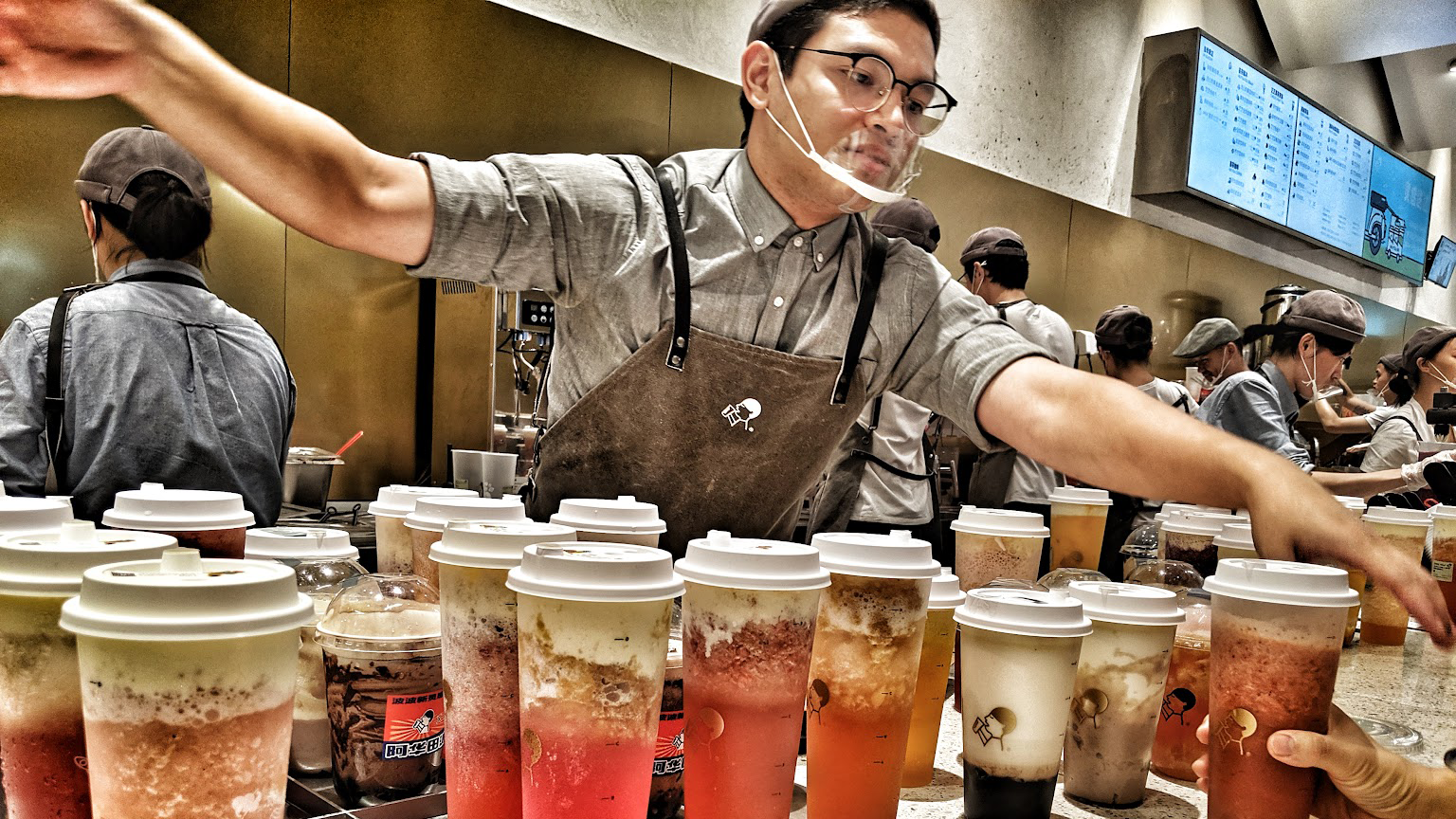
人声鼎沸 — Rén Shēng Dǐng Fèi. The roar of a room that's alive — literally "the sound of voices boiling like water in a cauldron." The 鼎 was a ritual bronze vessel; the image is of human noise at a rolling boil. This is tied to a value Westerners often read backwards: 热闹 (rènao), the warmth of liveliness, the good kind of loud. A silent restaurant is not refined here. It's a warning. You want the boiling cauldron. The in-crowd is always already inside it.
大快朵颐 — Dà Kuài Duǒ Yí. To eat heartily, jaw working, with open delight. The phrase reaches all the way back to the I Ching, and it grants something the West is oddly stingy with: permission to indulge without irony. Not the performance of a tasting menu — the real, unguarded pleasure of a table that's too full and a meal that goes long.
精致穷 — Jīng Zhì Qióng. And its modern counterweight. This one isn't ancient — it was born on the Chinese internet, which is exactly why it's worth including: the language is still being written. "Refined poverty," the art of living beautifully without the budget to match. It describes a generation that will spend its last note on a perfect coffee and a good haircut. There's no shame in the term, only recognition. The street-stall bowl that outclasses the hotel is jīng zhì qióng made edible.
食不厌精,脍不厌细 — Shí Bù Yàn Jīng, Kuài Bù Yàn Xì. Confucius, the Analects: "Never tire of finely milled grain, nor of finely sliced meat." Twenty-five centuries ago, the case was already being made that how a thing is prepared is worth caring about. Craft is not a recent affectation imported from France. It's old here — older than almost anything you can name — and it sits comfortably beside the noise and the indulgence rather than against them.
回味无穷 — Huí Wèi Wú Qióng. An aftertaste with no end. It's said of a flavor that keeps returning to you hours after the bowl is empty — and, just as often, of an experience that does the same. This is where the road and the table turn out to be the same thing. The trip you measure correctly is not the one with the most stamps. It's the one that's still arriving long after you've gone home.
So: walk to where the water ends. Sit. Watch the clouds rise. None of this is meant to be performed — you don't recite wuwei at a delayed gate to prove you've read the brochure. The idioms simply describe a different relationship to a place. Less conquest, more current. Understand that, and you've understood more about China than a galloping horse ever will.